Work
PropApp
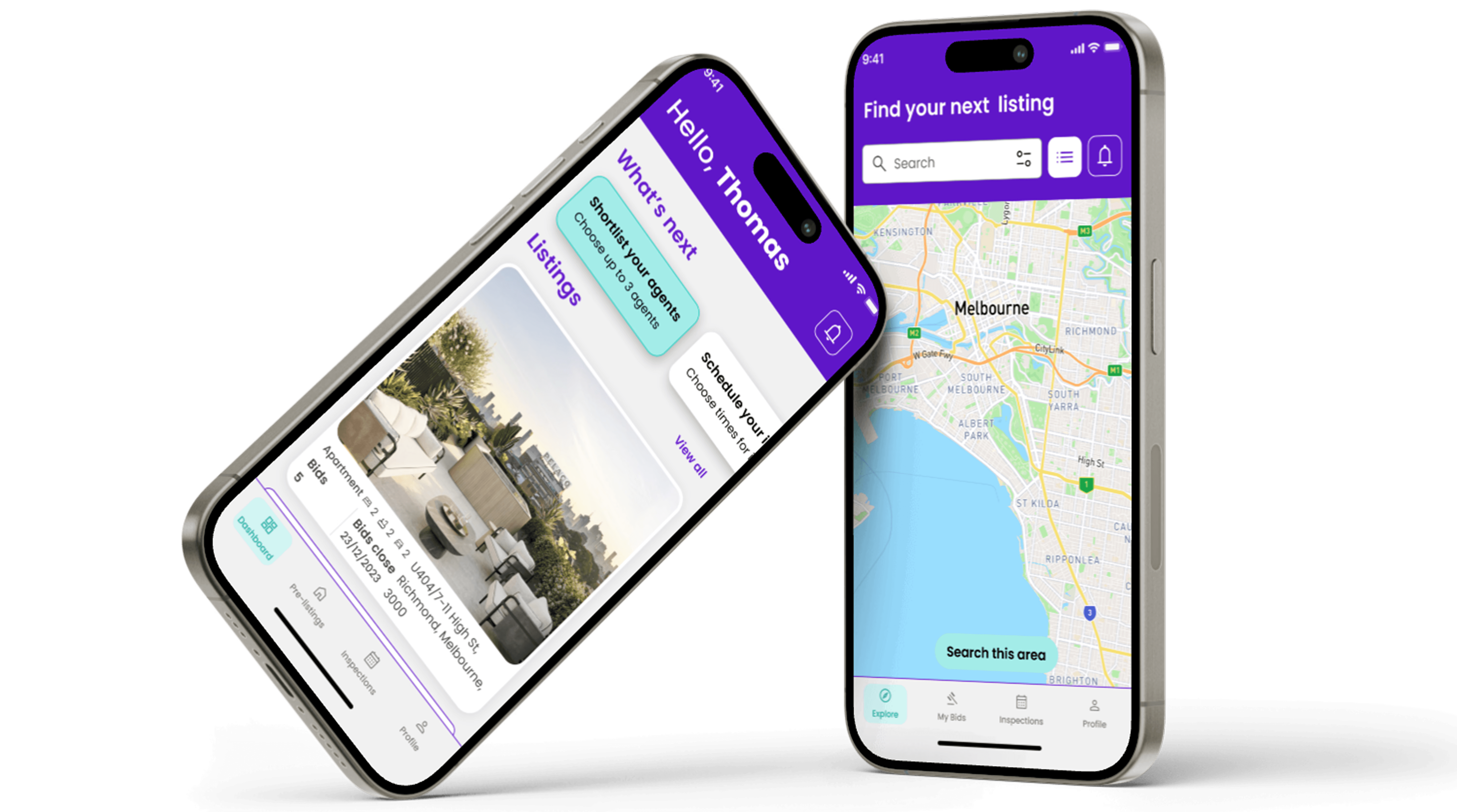
Impact at a Glance
Engagement Scope:
13-month engagement as Founding Product Designer and Acting PM
Solo Designer taking concept to development ready POC
0 to 1 product build, from idea to 2 functional apps
Strategic Decisions Driven:
Led a product rebrand from Propexchange to PropApp
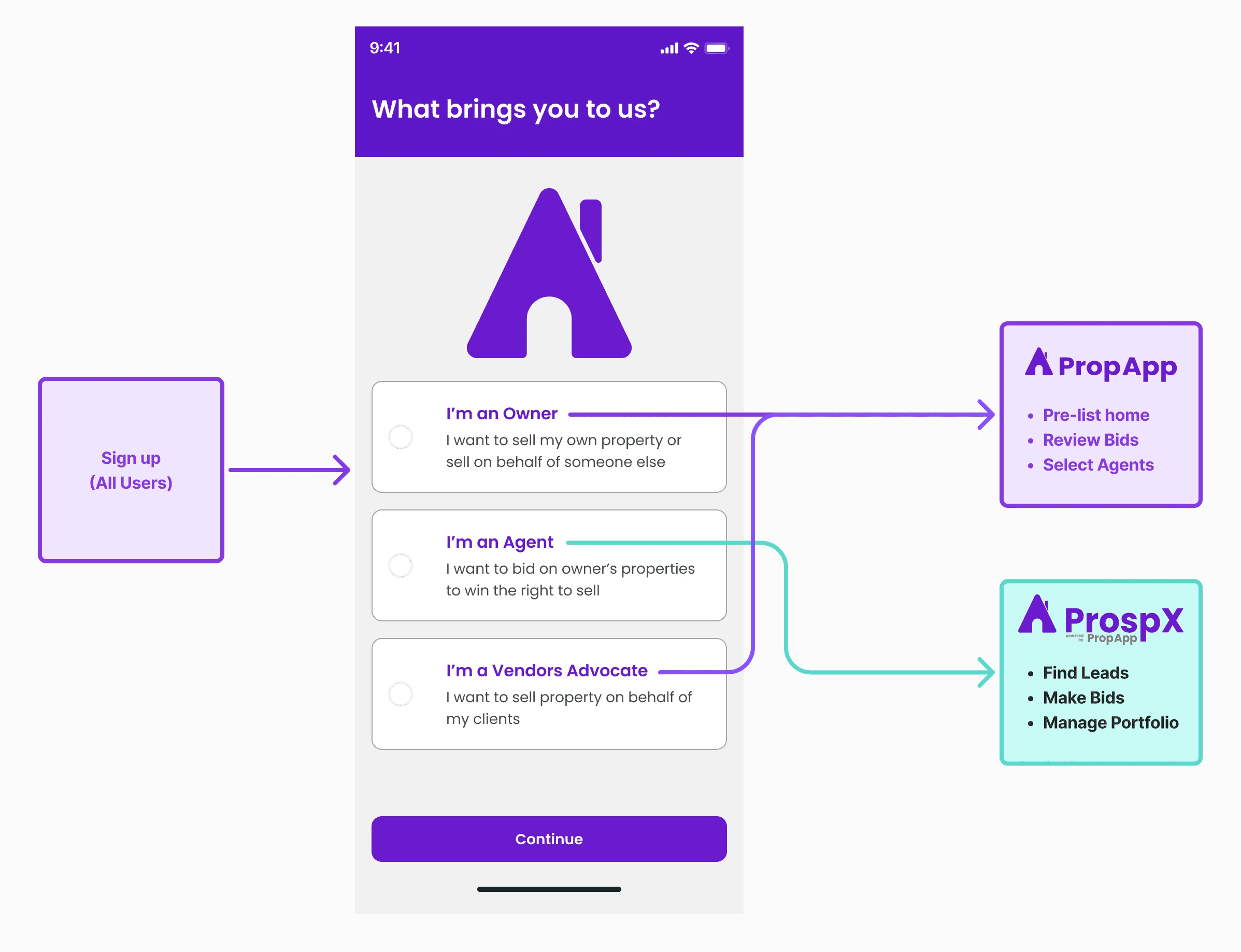
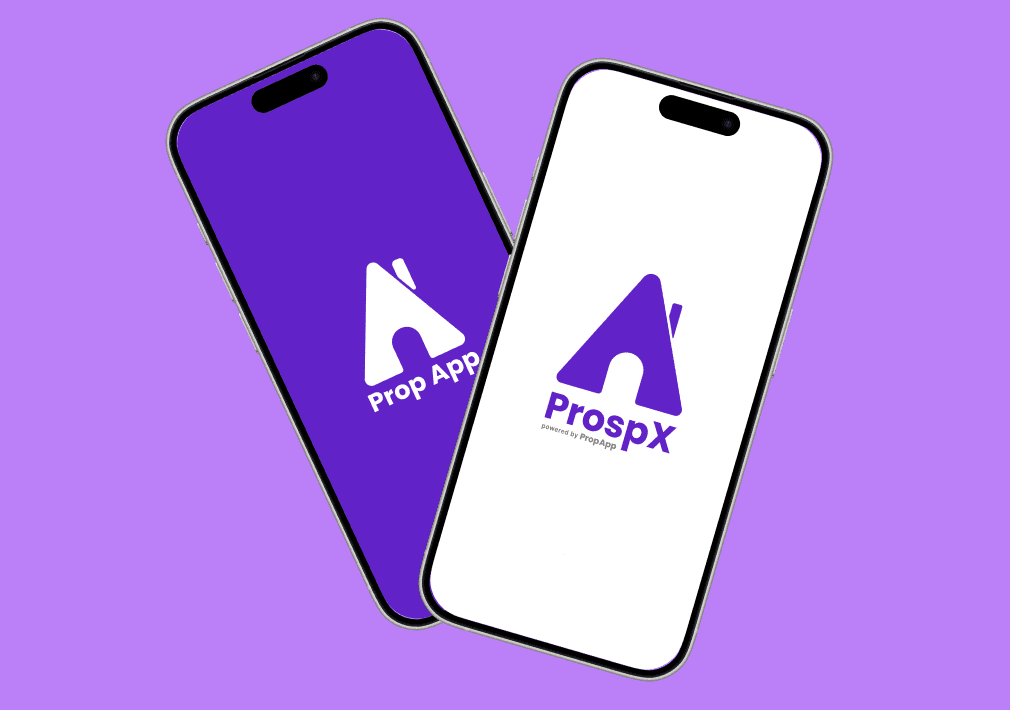
Split the app PropApp for home owners and ProspX for agents
Optimised core listing flow from 12 steps to 7 steps. 42% reduction
What I Delivered:
Two functional proof of concept applications

Complete brand identity
Comprehensive design system (AA WCAG 2.2)
End to end product design for a dual market place
Product management: Sprint planning, developer enablement, beta launch with real estate agents
The Challenge
Selling your home in Australia is opaque and frustrating. Homeowners don't know which agents to trust and often default to whoever puts a flyer in their mailbox or gives them a cold call. Which is stressful when you consider that the home is typically the largest asset anyone owns.
Agents waste time cold-calling to find motivated sellers. PropApp set out to create a transparent marketplace where homeowners post their property once and local agents compete to represent them.
My Scope
I joined PropApp when it was just an idea, a single rough screen, and two founders. As the first and sole designer, I was responsible for transforming their concept into a complete product experience from scratch. My work spanned:
End-to-end product design for a two-sided marketplace
Brand strategy and visual identity (including renaming from Propexchange to PropApp)
Design system built to AA WCAG standards
Product strategy, including the decision to split into two separate apps
Acting product manager role: feature prioritisation, developer collaboration, requirements gathering
Marketing strategy and advertising creative direction
I took the product from concept through to a functional proof-of-concept ready for deployment, working directly with the cofounders and eventually leading a small development team.
The Problem
Selling a home in Australia is typically someone's largest asset and a decision made perhaps once in a decade. It's a process plagued by issues in transparency and inefficiencies on both sides of the transaction.
For Homeowners
The process feels overwhelming and unclear:
The market is dominated by two listing platforms (Domain.com and RealEstate.com) and countless agencies
With no transparent way to evaluate agents, homeowners default to whoever put a flyer in their mailbox or their local agent
Real estate agents charge substantial commissions (often 2-3% of sale price) and upfront marketing costs, but the value proposition is unclear—most agents take photos and post to the same two sites
Sales and marketing plans are required, but homeowners have no easy way to compare these across agents
The high stakes and infrequency of the decision makes trust paramount, but the current system provides little basis for it
For Real Estate Agents
Lead generation is their biggest pain point: cold calling is universally despised but remains the primary method for finding motivated sellers
No efficient way to connect with homeowners actively considering selling
Intense competition within agencies can create internal conflicts
When agents find qualified and motivated leads it's very hard to show their unique value proposition
The Opportunity
Create a transparent, two-sided marketplace where homeowners can post their property once and let qualified local agents compete to represent them. Giving homeowners greater visibility into the process of selling their home, giving them the information and control to choose the agent that is right for them, while providing motivated leads to agents effectively reducing the need for cold calling
Strategy and Approach
Starting point
When I joined, PropApp was:
Just an idea with one rough screen
Named "Propexchange" with weak visual identity
Two founders with industry insight but no product
No user flows, no design system, no validated approach
My approach
With startup timeline and no budget for formal research, I focused on:
Competitive landscape analysis:
Deep exploration of Domain.com and RealEstate.com to understand Australian property listing conventions
Study of two-sided marketplace patterns (Airbnb, Uber, Upwork) for expected user behaviours
Stakeholder validation:
Regular discussions with founders about industry insight and vision
Direct conversations with real estate agents to understand pain points and validate assumptions
Informal testing of early prototypes with homeowners and agents
Iterative testing approach:
Rather than waiting for "perfect" research, I built rapid prototypes and tested them with available users, iterating based on feedback. The core listing flow went from 12 steps → 7 steps through this process.
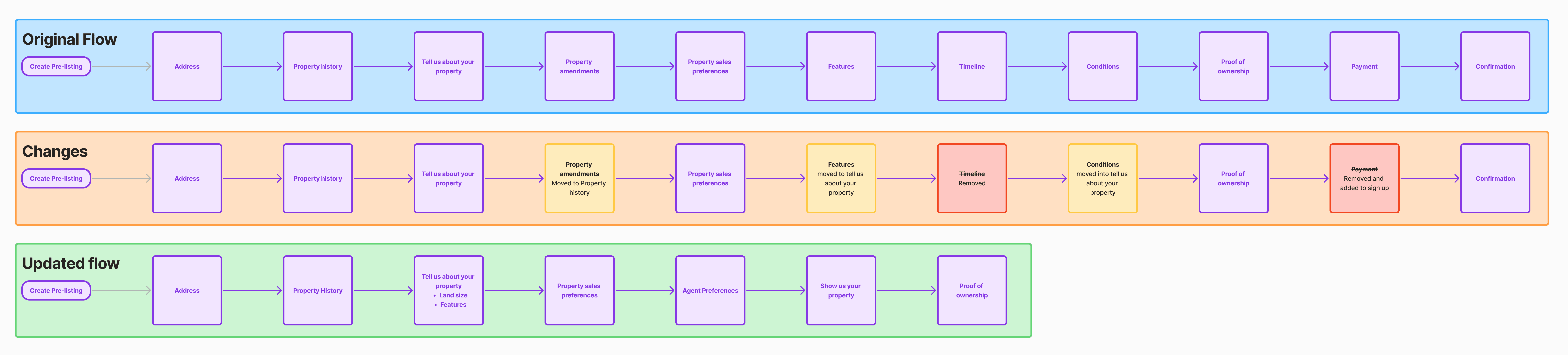
Core listing flow optimisation: reduced from 12 steps to 7 steps (42% reduction) through iterative user testing and information architecture refinement
Build, Test, Refine on Repeat
When I joined they had very little in the way of user flows, I spent my initial week with the team understanding their views on the process of selling a home, and exploring the core features of the app.
The core user journeys:
Sign up and sign in
Creating a property listing (Homeowner)
Making a bid (Agent)
These initial flows weren't polished and were long in process and page length. But these first flows gave me a test bed to experiment in style, branding, and to explore what questions and process were needed for both agents and homeowners to successfully complete their tasks.
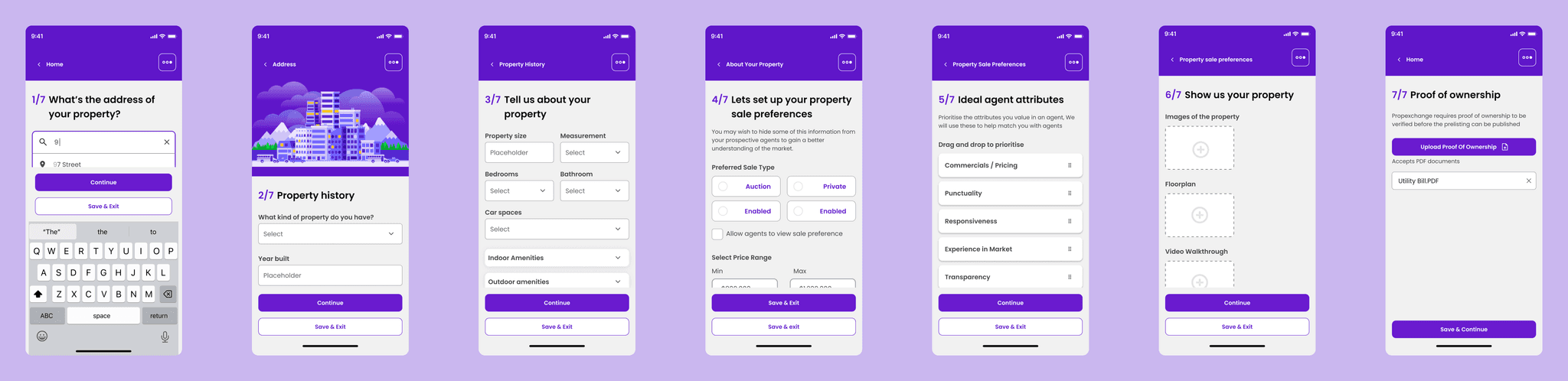
Homeowner pre-listing flow Version 4
Key Strategic Decisions
Rebranding to PropApp
The problem:
The original name "Propexchange" evoked property swapping (like Airbnb), not a marketplace for selling homes. The logo was unmemorable and unrelated to real estate.
My recommendation:
After exploring multiple naming directions with the founders, we landed on "PropApp". Simple, clear, and directly communicating the product's purpose.
The impact:
This rebrand changed how we positioned the product: from a novel "exchange" concept to a practical tool for property sales. It informed all subsequent design decisions and marketing direction.


Splitting the App
The problem I identified:
As features multiplied, I noticed distinct journey complexity emerging:
Homeowners needed simple listing creation
Agents needed portfolio management, territory mapping, lead tracking
Combined sign-up flow required branching logic to determine user type
Feature sets were diverging, not converging
My recommendation:
Split into PropApp (homeowners) and ProspX (agents) following successful two-sided marketplace patterns where buyers and providers use different apps.
Validation approach:
I brought this to developers first to confirm technical feasibility. They were enthusiastic it would enable cleaner codebase organisation and faster feature development per user group.
Impact:
Simplified user journeys (no branching signup flow)
Clearer value propositions per audience
Enabled parallel development tracks
Better codebase organisation (confirmed by dev team)
Building for Accessibility and Scale
Strategic rationale:
Property sales involve high-stakes decisions and diverse user demographics (age, technical literacy, abilities). Accessibility wasn't optional—it was essential for market viability.
My approach:
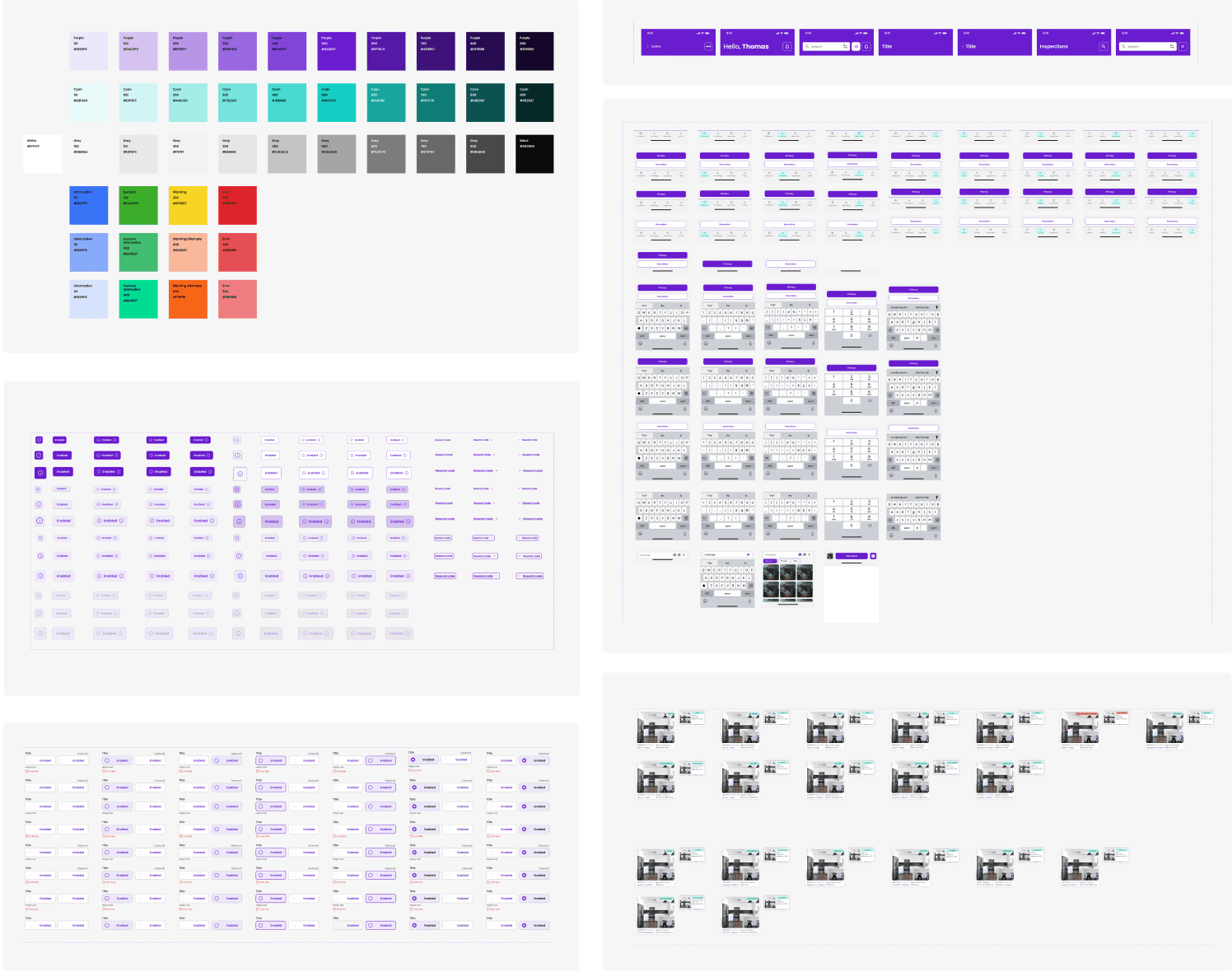
Built atomic-level design system to WCAG 2.2 AA standard, enabling:
Rapid iteration across long, text-heavy flows
Consistent accessibility compliance
Developer efficiency through reusable templates
Future scalability as features evolved
Delivery and Team Evolution
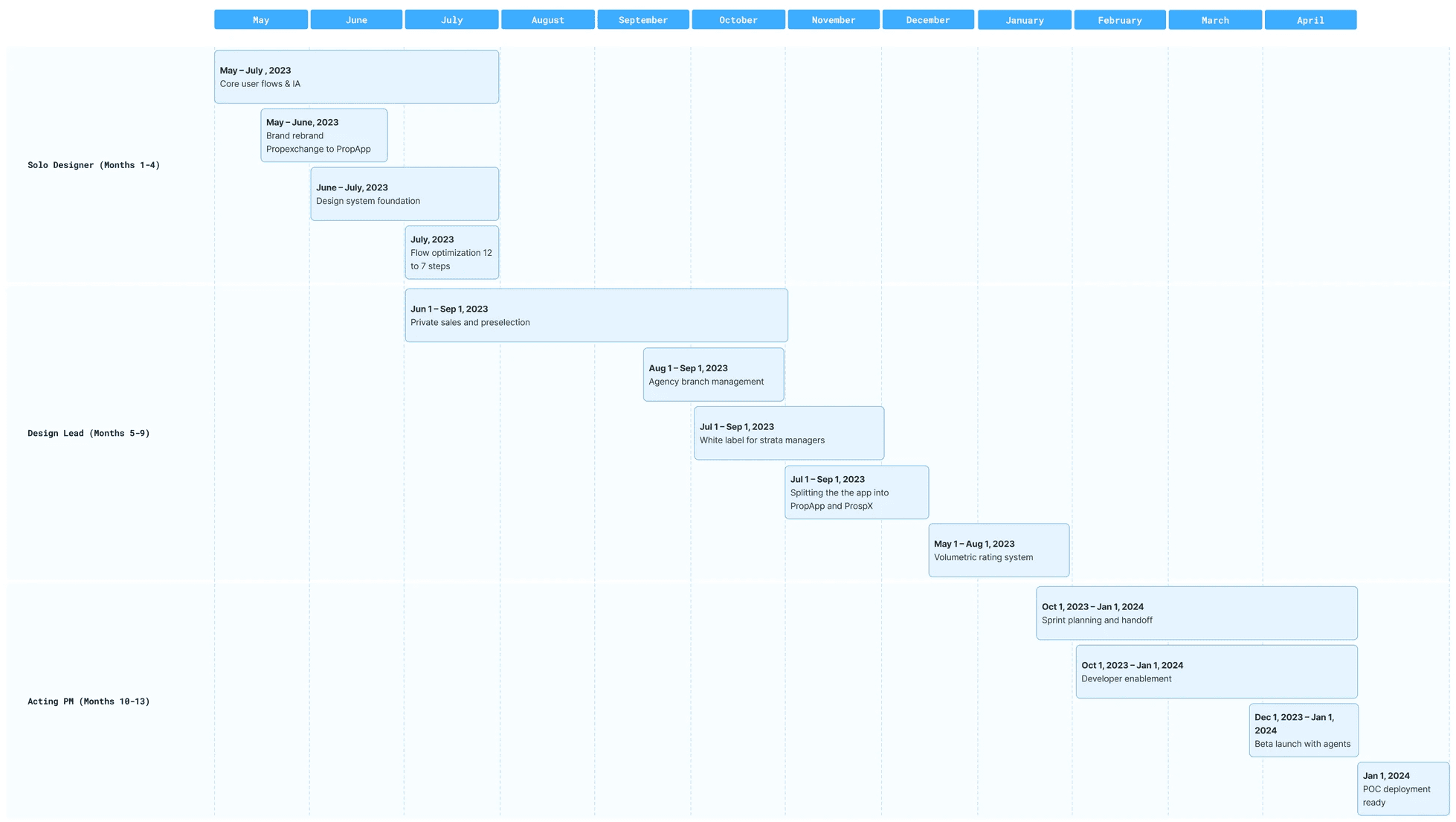
13-month engagement showing role evolution and key deliverables across three phases
From Solo Designer to Design Lead
Months 1-4: Foundations
Working solo, I established:
Core user flows and information architecture
Brand identity (rebrand from Propexchange to PropApp)
Design system fundamentals
Initial prototypes for founder and early tester validation
Key outcome:
Reduced property listing flow from 12 steps to 7 through iterative testing and refinement.
Months 5-9: product expansion
As development team was hired, I expanded the product with:
Interactive property map for agents
Volumetric rating system for agent credibility
Private sales and agent preselection features
White-label version for strata and building managers
Agency branch management tools
My role evolved:
From pure design to acting Product Manager sprint planning, requirements definition, developer collaboration.
Months 10-13: Development enablement and beta launch
With features ready for development, I:
Built handoff workflows and documentation
Conducted sprint kickoffs and desk checks
Iterated designs based on technical constraints
Signed off on feature completion
Launched beta test with real estate agents
Validation:
Agent testers responded positively: "Cold calling is the worst part of my day - this is really good!" and "I can see this becoming part of my daily routine."
Impact and Strategic Handoff
13-Month Engagement Outcomes
Strategic Decisions Implemented:
Rebrand from Propexchange → PropApp
Approved and adopted by founders, changed market positioningPlatform split into PropApp and ProspX
Development team enthusiastically adopted this architecture for cleaner codebaseCore flow optimisation from 12 → 7 steps
Based on iterative user testing showing information overload in early versions
What I delivered
Product:
Two functional proof-of-concept applications (PropApp for homeowners, ProspX for agents)
End-to-end marketplace experience: listing creation, agent bidding, communication, transaction tracking
Feature set including: property mapping, agent ratings, private sales, white-label capability, agency management
Design System:
Comprehensive component library built to WCAG 2.2 AA accessibility standard
100+ components enabling rapid iteration and developer efficiency
Atomic design structure allowing quick updates across long, complex flows
Brand & Marketing:
Complete brand identity (naming, logo, visual system)
Marketing asset direction (worked with video contractors on explainer videos and ads)
Brand positioning shift from "exchange" to "marketplace"
Team Enablement:
Transitioned from solo designer to design lead managing developer collaboration
Product management responsibilities: sprint planning, requirements, feature prioritisation
Handoff documentation and component specifications enabling team independence
Early Validation Signals
Beta tester feedback:
We conducted user testing for the ProspX POC, putting it in the hands of 6 agents across different agencies.
While anecdotal, this feedback validated core value propositions:
For agents: Reducing cold-calling burden
I love how easy it is to find places to sell
Real estate agent
I could see this becoming part of my daily routine.
Real estate agent
This is really good! Cold calling is the worst part of my day.
Real estate agent
If I Were Measuring Success Post-Launch
The engagement concluded when the POC delivery was completed. If I were to measure success of PropApp I would look at:
Marketplace Health:
Does the market placemodel create value to both sides
Listing velocity:
Properties listed per week/monthAgent engagement
Active agents bidding on listingsConversion rate
% of listings that successfully match with agentsTime-to-match
Days from listing to homeowner selecting an agent
User Satisfaction:
Does this solution meet user and business expectations
Homeowner NPS
Satisfaction with agent selection processAgent ROI
Cost per qualified lead vs. cold callingPlatform usage
Repeat usage by agents finding value
Product Validation:
Did the rebrand and splitting of the app improve user experience
Flow completion rates
% completing 7-step listing flow (expecting high rates given optimisation from 12 steps)
Platform preference
Whether agents choose PropApp vs. ProspX based on use case (validates split decision)