Work
Teachers Health
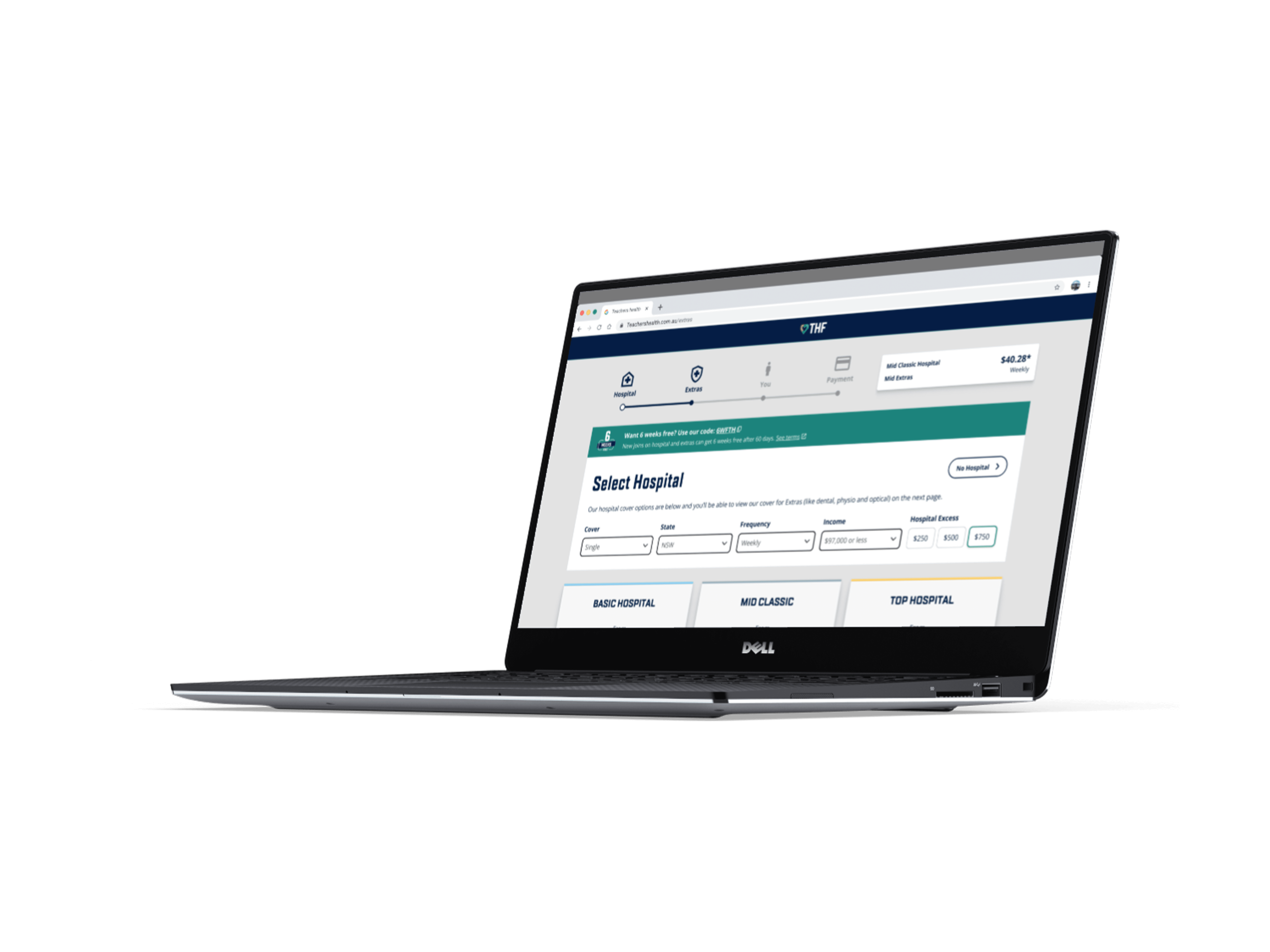

Impact at a Glance
Engagement Scope:
6-month Design leadership engagement at Thoughtworks
Led complete redesign of the digital conversion experience for Teachers Health
Joined post-discovery and filled critical research gaps
Strategic Decisions Driven:
Convinced senior leadership to abandon an experimental onboarding approach (87.5% rejection rate)
Moved eligibility verification to the front of the flow, reducing confusion
Designed reassurance messaging that tested 60% higher on trust
Validated outcomes:
60% more users mentioned trust unprompted with reassurance messaging
Only 12.5% of users could explain experimental flow (vs. 87.5% who couldn't)
Traditional single sitting approach preferred by vast majority
Testing insights convinced leadership to pivot, saving 3+ months of development
What I Delivered:
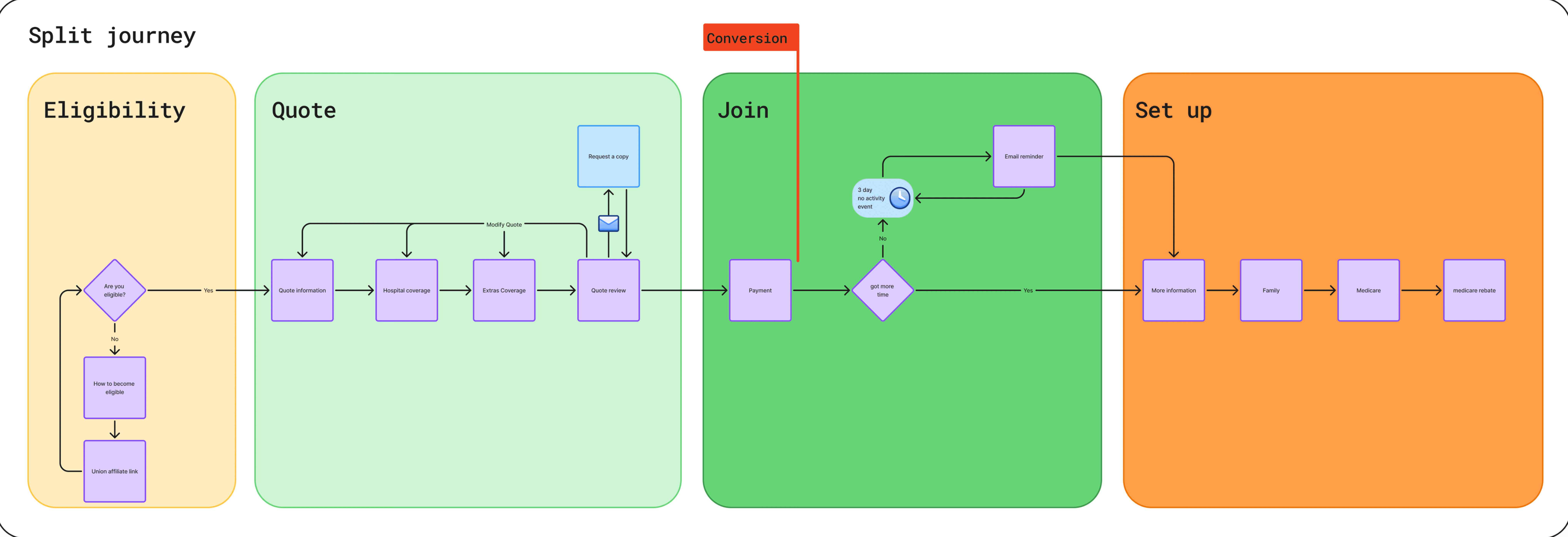
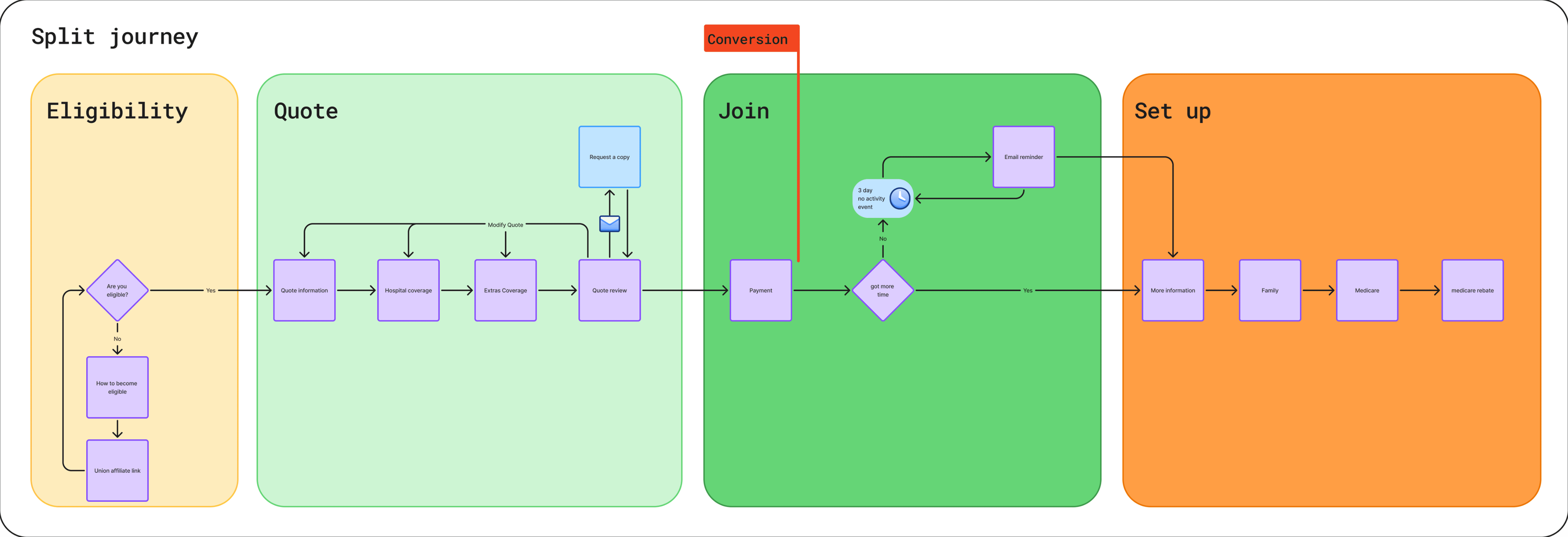
Complete end-to-end conversion journey (eligibility → post-purchase) for web and mobile
Multi-brand design token system enabling rapid cross-brand deployment
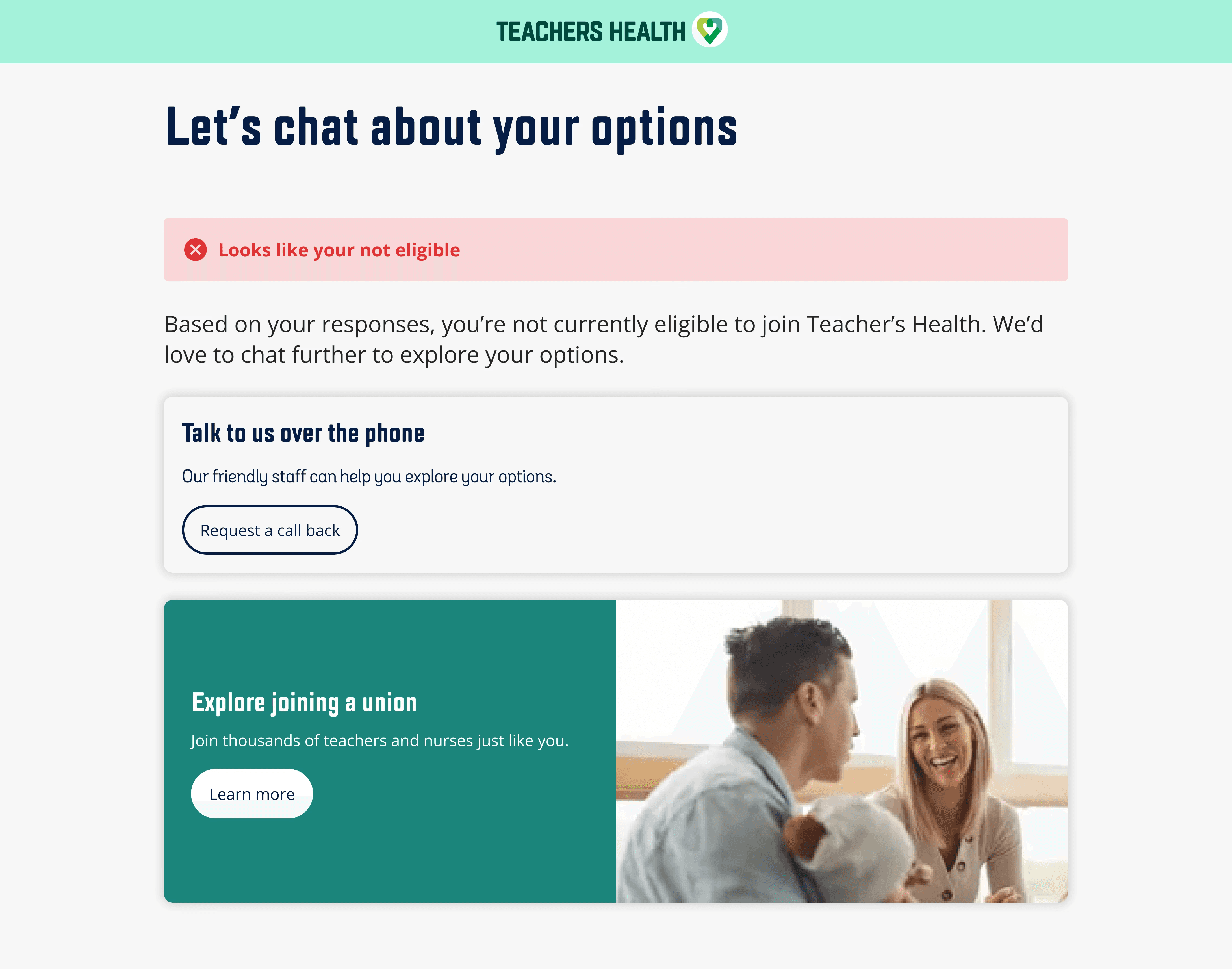
Redesigned eligibility checker with educational failure states
Complete design specifications across all conversion touchpoints
The Problem
Teachers Health is redefining their brand and online presence and this is being driven by some very ambitious 5-years goals.
As part of their plan to drive up conversion they are improving their mobile app, redefining their conversion funnel, increasing post sign up communications, refreshing their website and brand.
Currently their online conversion funnel accounts for ~10% of their total conversions, relying on their sales team to find and convert leads.
My Scope:
Strategic research leadership (competitive analysis, user testing, stakeholder interviews)
Complete journey redesign (eligibility → post-purchase communications)
Multi-brand design system architecture
Stakeholder management across all business departments
Team building (hired and mentored junior designer)
Challenging senior leadership assumptions with testing data
Strategy and Approach
I joined the project after an initial discovery phase, and found it lacking a fair amount of foundational research. The discovery that had recently concluded was focused on business vision but had ignored the business reality of how they currently function, how their systems interact with their departments, and competitor analysis.
My Response
I flagged these gaps immediately, but was unable to get the timeline extended. I asked for additional resources and was able to hire a junior experience designer, to help me design and research.
System investigation
Spent time investigating and understand how the current legacy system operated, and what constraints would affect our designs
Competitor analysis
Examining health insurers domestically and abroad to see how they structure their onboarding journeys and investigating how they are beginning to use AI for a more interactive experience
User journey mapping
Documenting the existing journey, identifying redundancies and planning new approaches for an Omnichannel experience. Drafting and experimenting with new user journeys to align with their new vision
Stakeholder interviews
Meeting all the department heads to understand how they fit into the process, how they use information, and to understand the pain points they feel in the current sign up process
Testing and Strategic Pivot
With a limited timeline and a senior leadership team invested in an "innovative" approach, I insisted on validation testing before committing to development. The leadership team wanted to experiment with the onboarding process to bring the conversion step forward and to use user patterns often seen in other highly regulated industries like banking for a more efficient process.
Testing Methodology
24 participants across 2 demographics; educators, Nurses
Moderated remote testing sessions, 45 mins each
Ages 25-60, mix of currently insured and prospective customers
4 Journey variations tested: Traditional vs Experimental x with/without reassurance messaging
Experimental Flow Failed Comprehension Test:
3 of 24 testers (12.5%) could correctly identify and explain the process and expectations of the experimental journey
Direct quote: "Wait, so I'm covered now? Or do I need to do more stuff first?"
All testers correctly explained the process and expectations of the traditional flow
8 users flagged a critical concern that they would be worried that the new approach would create gaps in their coverage if they forgot to complete setup.
Reassurance Messaging Drove Trust:
60% more users mentioned trust unprompted in reassurance-enhanced versions compared to the control versions
Users directly cited: cooling-off periods, physical store presence, mobile app availability
Trust mentions correlated with stated likelihood to convert
The Difficult Conversation:
Presenting these findings to senior leadership who had championed the experimental approach required:
Data-first framing: Led with user quotes and comprehension failure rates
Business impact translation: Positioned confusion as conversion risk and potential support burden
Respectful pivot: Acknowledged the innovative intent while recommending the validated path
Leadership accepted the recommendation to pursue the traditional journey with enhanced reassurance—a decision that potentially saved 3+ months of development on a solution users didn't understand.
Design System and Implementation Strategy
Now that we had validated our design approach it was time to apply the feedback from our users, ensure it meets the requirements for the current legacy systems, and hone the design.
While there were major plans to not only redesign the front end of the process, but also the back end and systems that it would interact with I was tasked with creating a design and journey that could be easily updated and changed as these other improvements were developed over the next few years.
Design System and Tokens
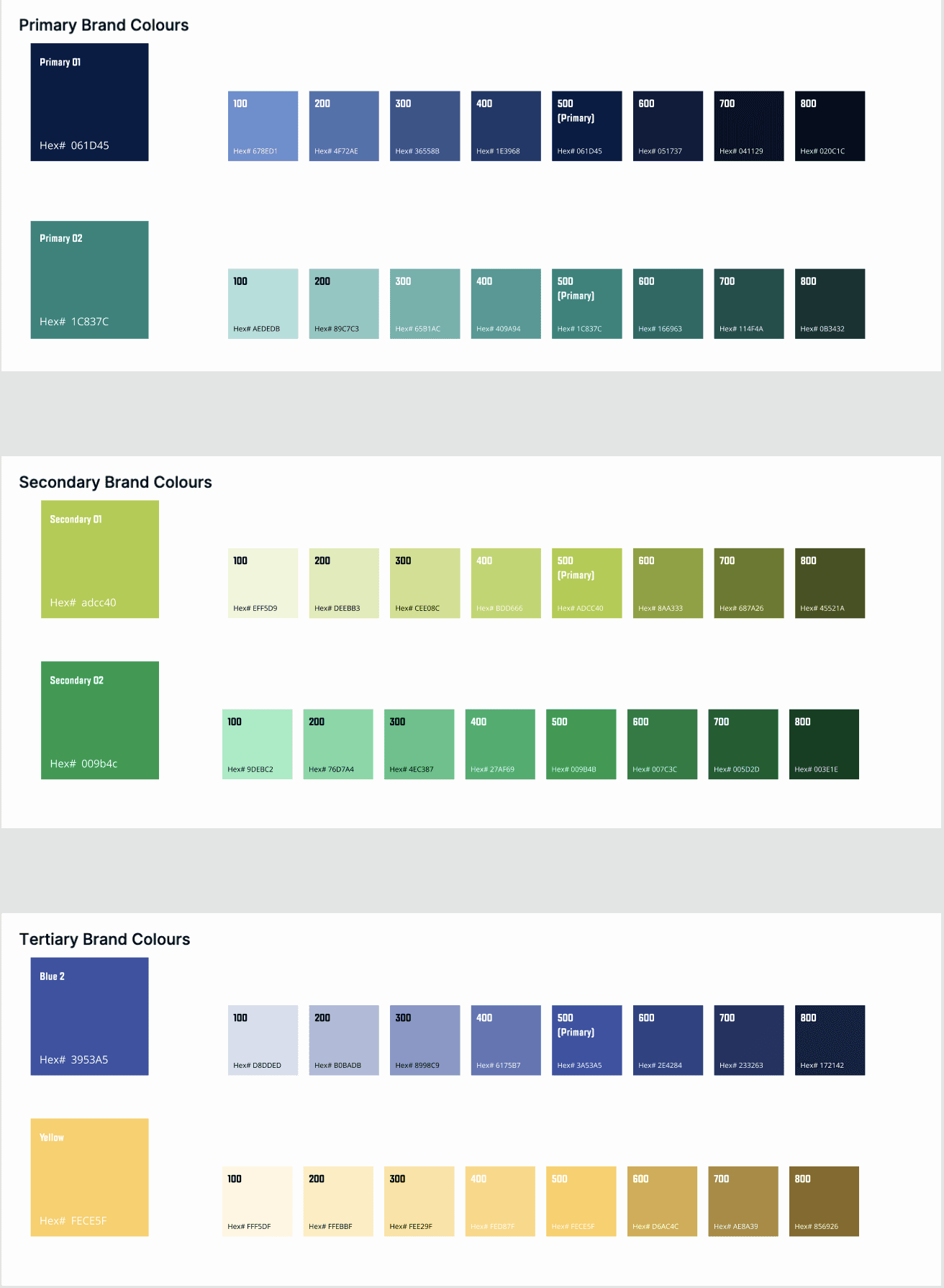
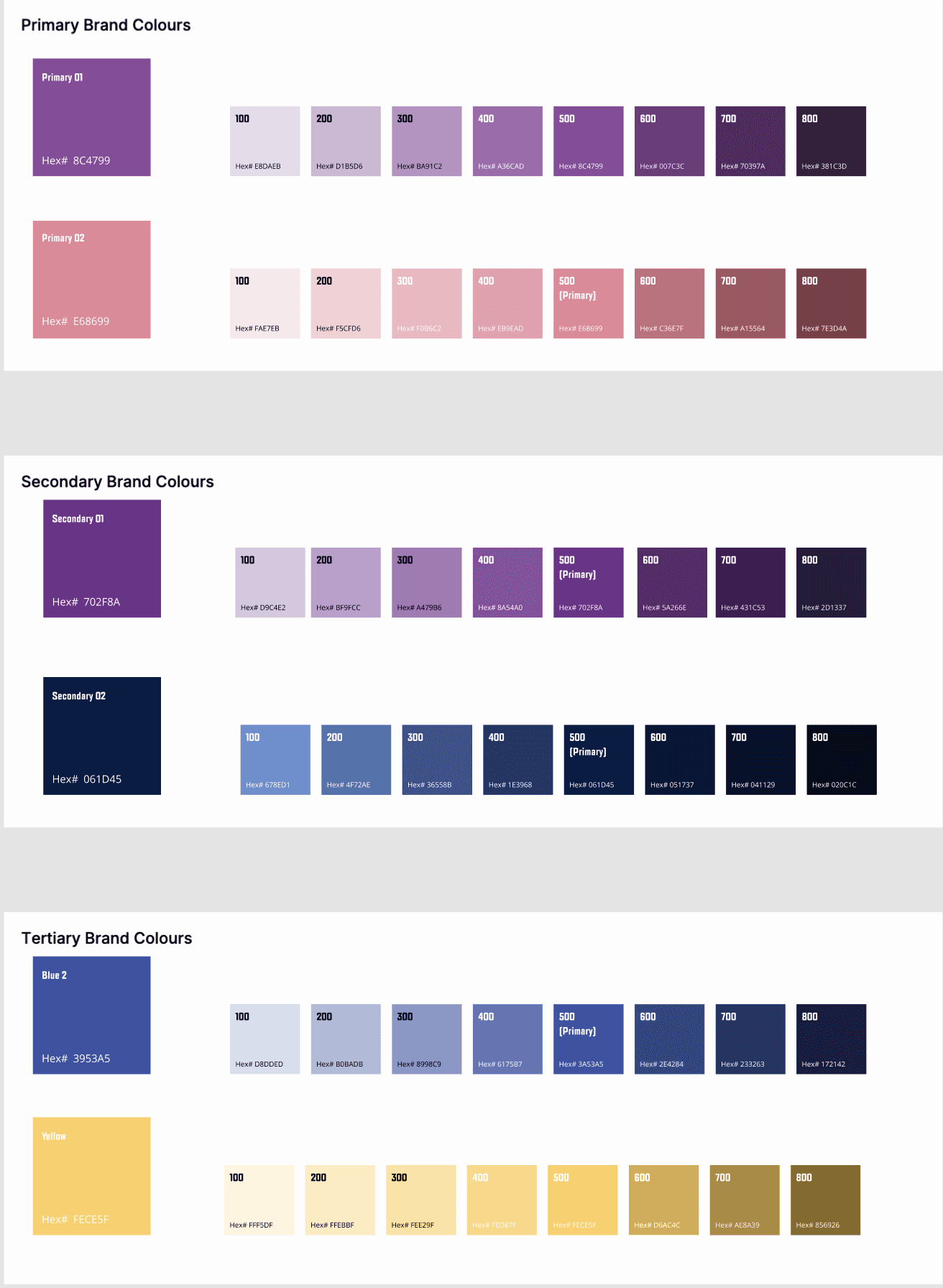
I started by tokenising the design system so that Teachers Health and its sister brand could easily and quickly update their brand colours and components across all the brands and journeys at once. This also allowed us to set up instances in Figma where we could drag our screens into different brand environments to see what they would look like.

Eligibility Confusion
The Problem We Discovered:
Unlike other health funds, Teachers Health is restricted to union-affiliated professionals in education and health. However, testing revealed:
Most users thought Teachers Health was open to everyone
They assumed working in the profession would just give them a discount
Eligibility rejection felt arbitrary and frustrating
No clear path forward for ineligible users
Our Solution:
Moved eligibility to the front of the process
users need to understand restrictions before they invest time in quotesRevised eligibility questions
to more clearly evaluate eligibility statusAdded educational failure states
Explaining why they are not eligible and providing pathways to gain eligibility through appropriate unions
Strategic Business Value:
This approach:
Reduced user frustration
Ineligible users didn't waste their time, or learnt how to become eligibleIncreased sales team capacity
Sales team spends less time chasing unqualified leads or fielding questions from ineligible users.Opened opportunity for Teachers Health to build stronger union partnerships.
Delivery and Strategic Handoff
Complete Conversion Journey
Eligibility verification flow (redesigned to front-load and educate on failure)
Quotation and comparison experience
Personal information collection and verification
Payment and confirmation
Post-purchase email communication sequence
Responsive web and mobile designs across all flows
Multi-brand System Architecture
Tokenised design system enabling 3 sister brands to share components while maintaining brand distinction
Variables for: Teachers Health (primary), UNI Health, Nurses Health
Figma instances allowing brand-switching for any screen
Component library built for extensibility as backend systems evolve
If I Were Measuring Success Post-implementation, I'd Track
Conversion metrics
Eligibility pass-through rate (benchmark: current 10% online conversion)
Flow completion rate (eligibility → purchase)
Drop-off analysis by stage
These metrics would validate whether moving eligibility forward reduced confusion and abandonment, as our testing predicted.
User Experience Validation
Trust signal effectiveness (testing showed 60% improvement from the control tests)
Time to complete flow vs. industry benchmarks
Support ticket reduction related to eligibility confusion
These metrics would validate whether reassurance messaging converted research insights into measurable trust and conversion improvements.
Business Impact
Online conversion rate growth (moving from 10% toward growth targets)
Multi-brand deployment efficiency (token system ROI)
Development velocity improvements
These metrics would validate whether the token system enabled faster multi-brand development as intended, and whether the traditional approach outperformed the experimental approach leadership had favoured.
Strategic Insight
This engagement reinforced several principles about transformation work in constrained environments:
Discovery gaps compound throughout delivery
What happened
I joined after an initial discovery phase and found sizeable gaps in the foundational research.
My response
Rather than proceeding with incomplete information I:
Flagged gaps immediately to project leadership
Negotiated additional resources (hired junior designer to maintain delivery velocity)
Conducted parallel foundational research (system investigation, competitor analysis, stakeholder interviews)
Built time into sprint planning to pay down "discovery debt"
Innovation must serve the user
What happened
Leadership championed an experimental approach to stand out from competitors and bring the conversion step forward.
My response
Rather than proceeding with assumptions I pushed to validate this approach through user tests:
Validate their idea with real users and compare it to the status quo
Present the data. Users were confused by the experimental approach with only 12.5% correctly understanding the process
Translated to business impact: increased confusion leads to frustration and anger that would burden the support team
Respectfully pivot, acknowledge the innovation intent while recommending a validated approach
Navigating constraints of legacy systems
What happened
Their existing legacy system wasn't able to support every feature or change we wanted
My response